Tree Nested PyTorch Tensor Lib

Overview

DI-treetensor

PyPI PyPI - Python Version Loc Comments

Docs Deploy Code Test Badge Creation Package Release codecov

GitHub stars GitHub forks GitHub commit activity GitHub issues GitHub pulls Contributors GitHub license

treetensor is a generalized tree-based tensor structure mainly developed by OpenDILab Contributors.

Almost all the operation can be supported in form of trees in a convenient way to simplify the structure processing when the calculation is tree-based.

Installation

You can simply install it with pip command line from the official PyPI site.

pip install di-treetensor

For more information about installation, you can refer to Installation.

Documentation

The detailed documentation are hosted on https://opendilab.github.io/DI-treetensor.

Only english version is provided now, the chinese documentation is still under development.

Quick Start

You can easily create a tree value object based on FastTreeValue.

import builtins
import os
from functools import partial

import treetensor.torch as torch

print = partial(builtins.print, sep=os.linesep)

if __name__ == '__main__':
    # create a tree tensor
    t = torch.randn({'a': (2, 3), 'b': {'x': (3, 4)}})
    print(t)
    print(torch.randn(4, 5))  # create a normal tensor
    print()

    # structure of tree
    print('Structure of tree')
    print('t.a:', t.a)  # t.a is a native tensor
    print('t.b:', t.b)  # t.b is a tree tensor
    print('t.b.x', t.b.x)  # t.b.x is a native tensor
    print()

    # math calculations
    print('Math calculation')
    print('t ** 2:', t ** 2)
    print('torch.sin(t).cos()', torch.sin(t).cos())
    print()

    # backward calculation
    print('Backward calculation')
    t.requires_grad_(True)
    t.std().arctan().backward()
    print('grad of t:', t.grad)
    print()

    # native operation
    # all the ops can be used as the original usage of `torch`
    print('Native operation')
    print('torch.sin(t.a)', torch.sin(t.a))  # sin of native tensor

The result should be

<Tensor 0x7f0dae602760>
├── a --> tensor([[-1.2672, -1.5817, -0.3141],
│                 [ 1.8107, -0.1023,  0.0940]])
└── b --> <Tensor 0x7f0dae602820>
    └── x --> tensor([[ 1.2224, -0.3445, -0.9980, -0.4085],
                      [ 1.5956,  0.8825, -0.5702, -0.2247],
                      [ 0.9235,  0.4538,  0.8775, -0.2642]])

tensor([[-0.9559,  0.7684,  0.2682, -0.6419,  0.8637],
        [ 0.9526,  0.2927, -0.0591,  1.2804, -0.2455],
        [ 0.4699, -0.9998,  0.6324, -0.6885,  1.1488],
        [ 0.8920,  0.4401, -0.7785,  0.5931,  0.0435]])

Structure of tree
t.a:
tensor([[-1.2672, -1.5817, -0.3141],
        [ 1.8107, -0.1023,  0.0940]])
t.b:
<Tensor 0x7f0dae602820>
└── x --> tensor([[ 1.2224, -0.3445, -0.9980, -0.4085],
                  [ 1.5956,  0.8825, -0.5702, -0.2247],
                  [ 0.9235,  0.4538,  0.8775, -0.2642]])

t.b.x
tensor([[ 1.2224, -0.3445, -0.9980, -0.4085],
        [ 1.5956,  0.8825, -0.5702, -0.2247],
        [ 0.9235,  0.4538,  0.8775, -0.2642]])

Math calculation
t ** 2:
<Tensor 0x7f0dae602eb0>
├── a --> tensor([[1.6057, 2.5018, 0.0986],
│                 [3.2786, 0.0105, 0.0088]])
└── b --> <Tensor 0x7f0dae60c040>
    └── x --> tensor([[1.4943, 0.1187, 0.9960, 0.1669],
                      [2.5458, 0.7789, 0.3252, 0.0505],
                      [0.8528, 0.2059, 0.7699, 0.0698]])

torch.sin(t).cos()
<Tensor 0x7f0dae621910>
├── a --> tensor([[0.5782, 0.5404, 0.9527],
│                 [0.5642, 0.9948, 0.9956]])
└── b --> <Tensor 0x7f0dae6216a0>
    └── x --> tensor([[0.5898, 0.9435, 0.6672, 0.9221],
                      [0.5406, 0.7163, 0.8578, 0.9753],
                      [0.6983, 0.9054, 0.7185, 0.9661]])


Backward calculation
grad of t:
<Tensor 0x7f0dae60c400>
├── a --> tensor([[-0.0435, -0.0535, -0.0131],
│                 [ 0.0545, -0.0064, -0.0002]])
└── b --> <Tensor 0x7f0dae60cbe0>
    └── x --> tensor([[ 0.0357, -0.0141, -0.0349, -0.0162],
                      [ 0.0476,  0.0249, -0.0213, -0.0103],
                      [ 0.0262,  0.0113,  0.0248, -0.0116]])


Native operation
torch.sin(t.a)
tensor([[-0.9543, -0.9999, -0.3089],
        [ 0.9714, -0.1021,  0.0939]], grad_fn=<SinBackward>)

For more quick start explanation and further usage, take a look at:

Extension

If you need to translate treevalue object to runnable source code, you may use the potc-treevalue plugin with the installation command below

pip install DI-treetensor[potc]

In potc, you can translate the objects to runnable python source code, which can be loaded to objects afterwards by the python interpreter, like the following graph

potc_system

For more information, you can refer to

Contribution

We appreciate all contributions to improve DI-treetensor, both logic and system designs. Please refer to CONTRIBUTING.md for more guides.

And users can join our slack communication channel, or contact the core developer HansBug for more detailed discussion.

License

DI-treetensor released under the Apache 2.0 license.

You might also like...
 Pretty Tensor - Fluent Neural Networks in TensorFlow
Pretty Tensor - Fluent Neural Networks in TensorFlow

Pretty Tensor provides a high level builder API for TensorFlow. It provides thin wrappers on Tensors so that you can easily build multi-layer neural networks.

A torch.Tensor-like DataFrame library supporting multiple execution runtimes and Arrow as a common memory format

TorchArrow (Warning: Unstable Prototype) This is a prototype library currently under heavy development. It does not currently have stable releases, an

Gradient-free global optimization algorithm for multidimensional functions based on the low rank tensor train format

ttopt Description Gradient-free global optimization algorithm for multidimensional functions based on the low rank tensor train (TT) format and maximu

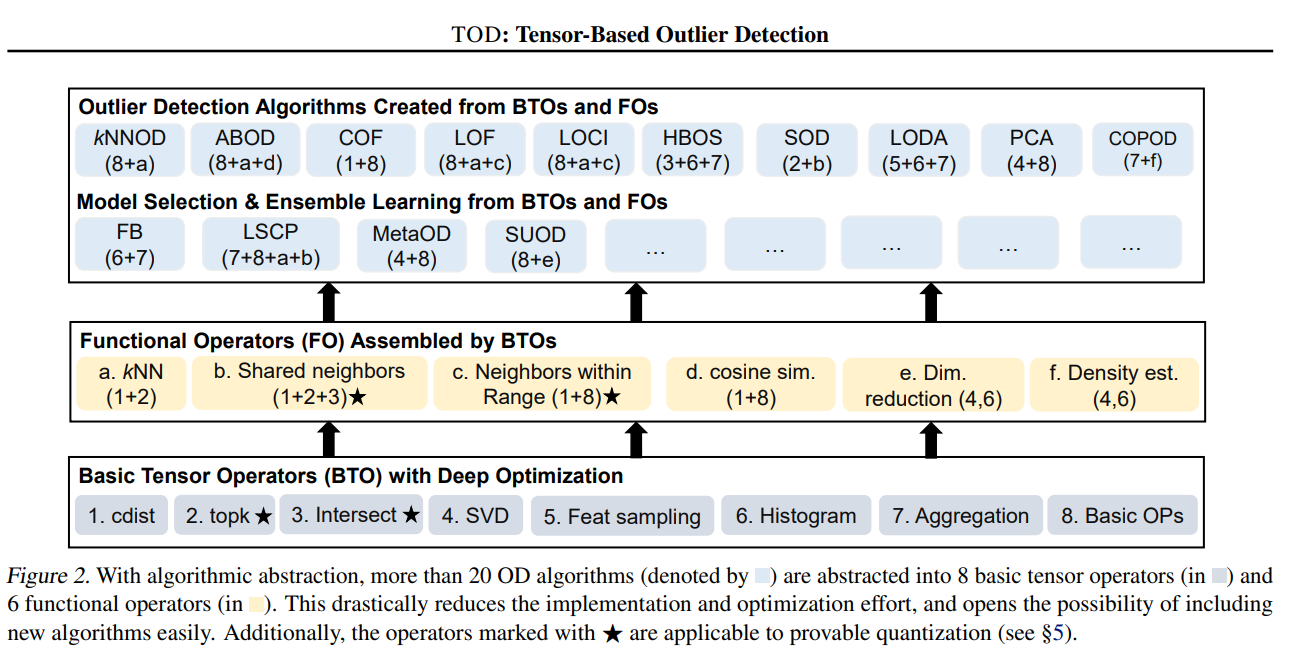
 (Py)TOD: Tensor-based Outlier Detection, A General GPU-Accelerated Framework
(Py)TOD: Tensor-based Outlier Detection, A General GPU-Accelerated Framework

(Py)TOD: Tensor-based Outlier Detection, A General GPU-Accelerated Framework Background: Outlier detection (OD) is a key data mining task for identify

Code to reproduce the results in the paper
Code to reproduce the results in the paper "Tensor Component Analysis for Interpreting the Latent Space of GANs".

Tensor Component Analysis for Interpreting the Latent Space of GANs [ paper | project page ] Code to reproduce the results in the paper "Tensor Compon

Self-Correcting Quantum Many-Body Control using Reinforcement Learning with Tensor Networks

Self-Correcting Quantum Many-Body Control using Reinforcement Learning with Tensor Networks This repository contains the code and data for the corresp

mbrl-lib is a toolbox for facilitating development of Model-Based Reinforcement Learning algorithms.

mbrl-lib is a toolbox for facilitating development of Model-Based Reinforcement Learning algorithms. It provides easily interchangeable modeling and planning components, and a set of utility functions that allow writing model-based RL algorithms with only a few lines of code.

OpenDILab RL Kubernetes Custom Resource and Operator Lib

DI Orchestrator DI Orchestrator is designed to manage DI (Decision Intelligence) jobs using Kubernetes Custom Resource and Operator. Prerequisites A w

Jittor Medical Segmentation Lib -- The assignment of Pattern Recognition course (2021 Spring) in Tsinghua University

THU模式识别2021春 -- Jittor 医学图像分割 模型列表 本仓库收录了课程作业中同学们采用jittor框架实现的如下模型: UNet SegNet DeepLab V2 DANet EANet HarDNet及其改动HarDNet_alter PSPNet OCNet OCRNet DL

Comments
  • PyTorch OP List(P0)

    PyTorch OP List(P0)

    reference: https://pytorch.org/docs/1.8.0/torch.html

    common

    • [x] numel
    • [x] cpu
    • [x] cuda
    • [x] to

    Creation Ops

    • [x] torch.zeros_like
    • [x] torch.randn_like
    • [x] torch.randint_like
    • [x] torch.ones_like
    • [x] torch.full_like
    • [x] torch.empty_like
    • [x] torch.zeros
    • [x] torch.randn
    • [x] torch.randint
    • [x] torch.ones
    • [x] torch.full
    • [x] torch.empty

    Indexing, Slicing, Joining, Mutating Ops

    • [x] cat
    • [x] chunk
    • [ ] gather
    • [x] index_select
    • [x] masked_select
    • [x] reshape
    • [ ] scatter
    • [x] split
    • [x] squeeze
    • [x] stack
    • [ ] tile
    • [ ] unbind
    • [x] unsqueeze
    • [x] where

    Math Ops

    Pointwise Ops
    • [x] add
    • [x] sub
    • [x] mul
    • [x] div
    • [x] pow
    • [x] neg
    • [x] abs
    • [x] sign
    • [x] floor
    • [x] ceil
    • [x] round
    • [x] sigmoid
    • [x] clamp
    • [x] exp
    • [x] exp2
    • [x] sqrt
    • [x] log
    • [x] log10
    • [x] log2
    Reduction Ops
    • [ ] argmax
    • [ ] argmin
    • [x] all
    • [x] any
    • [x] max
    • [x] min
    • [x] dist
    • [ ] logsumexp
    • [x] mean
    • [ ] median
    • [x] norm
    • [ ] prod
    • [x] std
    • [x] sum
    • [ ] unique
    Comparison Ops
    • [ ] argsort
    • [x] eq
    • [x] ge
    • [x] gt
    • [x] isfinite
    • [x] isinf
    • [x] isnan
    • [x] le
    • [x] lt
    • [x] ne
    • [ ] sort
    • [ ] topk
    Other Ops
    • [ ] cdist
    • [x] clone
    • [ ] flip

    BLAS and LAPACK Ops

    • [ ] addbmm
    • [ ] addmm
    • [ ] bmm
    • [x] dot
    • [x] matmul
    • [x] mm
    enhancement 
    opened by PaParaZz1 3
  • PyTorch OP Doc List

    PyTorch OP Doc List

    P0

    • [x] cpu
    • [x] cuda
    • [x] to
    • [x] torch.zeros_like
    • [x] torch.randn_like
    • [x] torch.ones_like
    • [x] torch.zeros
    • [x] torch.randn
    • [x] torch.randint
    • [x] torch.ones
    • [x] cat
    • [x] reshape
    • [x] split
    • [x] squeeze
    • [x] stack
    • [x] unsqueeze
    • [x] where
    • [x] abs
    • [x] add
    • [x] clamp
    • [x] div
    • [x] exp
    • [x] log
    • [x] sqrt
    • [x] sub
    • [x] sigmoid
    • [x] pow
    • [x] mul
    • [ ] argmax
    • [ ] argmin
    • [x] all
    • [x] any
    • [x] max
    • [x] min
    • [x] dist
    • [x] mean
    • [x] std
    • [x] sum
    • [x] eq
    • [x] ge
    • [x] gt
    • [x] le
    • [x] lt
    • [x] ne
    • [x] clone
    • [x] dot
    • [x] matmul
    • [x] mm

    P1

    • [x] numel
    • [x] torch.randint_like
    • [x] torch.full_like
    • [x] torch.empty_like
    • [x] torch.full
    • [x] torch.empty
    • [x] chunk
    • [ ] gather
    • [x] index_select
    • [x] masked_select
    • [ ] scatter
    • [ ] tile
    • [ ] unbind
    • [x] ceil
    • [x] exp2
    • [x] floor
    • [x] log10
    • [x] log2
    • [x] neg
    • [x] round
    • [x] sign
    • [ ] bmm

    P2

    • [ ] logsumexp
    • [ ] median
    • [x] norm
    • [ ] prod
    • [ ] unique
    • [ ] argsort
    • [x] isfinite
    • [x] isinf
    • [x] isnan
    • [ ] sort
    • [ ] topk
    • [ ] cdist
    • [ ] flip
    • [ ] addbmm
    • [ ] addmm
    opened by PaParaZz1 2
  • dev(hansbug): add stream support for paralleling the calculations in tree

    dev(hansbug): add stream support for paralleling the calculations in tree

    Here is an example:

    import time
    
    import numpy as np
    import torch
    
    import treetensor.torch as ttorch
    
    N, M, T = 200, 2, 50
    S1, S2, S3 = 512, 1024, 2048
    
    
    def test_min():
        a = ttorch.randn({f'a{i}': (S1, S2) for i in range(N // M)}, device='cuda')
        b = ttorch.randn({f'a{i}': (S2, S3) for i in range(N // M)}, device='cuda')
    
        result = []
        for i in range(T):
            _start_time = time.time()
    
            _ = ttorch.matmul(a, b)
            torch.cuda.synchronize()
    
            _end_time = time.time()
            result.append(_end_time - _start_time)
    
        print('time cost: mean({}) std({})'.format(np.mean(result), np.std(result)))
    
    
    def test_native():
        a = {f'a{i}': torch.randn(S1, S2, device='cuda') for i in range(N)}
        b = {f'a{i}': torch.randn(S2, S3, device='cuda') for i in range(N)}
    
        result = []
        for i in range(T):
            _start_time = time.time()
    
            for key in a.keys():
                _ = torch.matmul(a[key], b[key])
            torch.cuda.synchronize()
    
            _end_time = time.time()
            result.append(_end_time - _start_time)
    
        print('time cost: mean({}) std({})'.format(np.mean(result), np.std(result)))
    
    
    def test_linear():
        a = ttorch.randn({f'a{i}': (S1, S2) for i in range(N)}, device='cuda')
        b = ttorch.randn({f'a{i}': (S2, S3) for i in range(N)}, device='cuda')
    
        result = []
        for i in range(T):
            _start_time = time.time()
    
            _ = ttorch.matmul(a, b)
            torch.cuda.synchronize()
    
            _end_time = time.time()
            result.append(_end_time - _start_time)
    
        print('time cost: mean({}) std({})'.format(np.mean(result), np.std(result)))
    
    
    def test_stream():
        a = ttorch.randn({f'a{i}': (S1, S2) for i in range(N)}, device='cuda')
        b = ttorch.randn({f'a{i}': (S2, S3) for i in range(N)}, device='cuda')
    
        ttorch.stream(M)
        result = []
        for i in range(T):
            _start_time = time.time()
    
            _ = ttorch.matmul(a, b)
            torch.cuda.synchronize()
    
            _end_time = time.time()
            result.append(_end_time - _start_time)
    
        print('time cost: mean({}) std({})'.format(np.mean(result), np.std(result)))
    
    
    def warmup():
        # warm up
        a = torch.randn(1024, 1024).cuda()
        b = torch.randn(1024, 1024).cuda()
        for _ in range(20):
            c = torch.matmul(a, b)
    
    
    if __name__ == '__main__':
        warmup()
        test_min()
        test_native()
        test_linear()
        test_stream()


    不过讲真,这个stream实际效果挺脆弱的,非常看tensor尺寸,大了小了都不行,GPU性能不够也不行,一弄不好还容易负优化,总之挺难伺候的。这部分如果想实用化的话得再研究研究。

    enhancement 
    opened by HansBug 1
  • Failure when try to convert between numpy and torch on Windows Python3.10

    Failure when try to convert between numpy and torch on Windows Python3.10

    See here: https://github.com/opendilab/DI-treetensor/runs/7820313811?check_suite_focus=true

    The bug is like

        @method_treelize(return_type=_get_tensor_class)
        def tensor(self: numpy.ndarray, *args, **kwargs):
    >       tensor_: torch.Tensor = torch.from_numpy(self)
    E       RuntimeError: Numpy is not available
    

    The only way I found to 'solve' this is to downgrade python to version3.9 to lower. So these tests will be skipped temporarily.

    bug 
    opened by HansBug 0
Releases(v0.4.0)
  • v0.4.0(Aug 14, 2022)

    What's Changed

    • dev(hansbug): remove support for py3.6 by @HansBug in https://github.com/opendilab/DI-treetensor/pull/12
    • pytorch upgrade to 1.12 by @zjowowen in https://github.com/opendilab/DI-treetensor/pull/11
    • dev(hansbug): add test for torch1.12.0 and python3.10 by @HansBug in https://github.com/opendilab/DI-treetensor/pull/13
    • dev(hansbug): add stream support for paralleling the calculations in tree by @HansBug in https://github.com/opendilab/DI-treetensor/pull/10

    New Contributors

    • @zjowowen made their first contribution in https://github.com/opendilab/DI-treetensor/pull/11

    Full Changelog: https://github.com/opendilab/DI-treetensor/compare/v0.3.0...v0.4.0

    Source code(tar.gz)
    Source code(zip)
  • v0.3.0(Jul 15, 2022)

    What's Changed

    • dev(hansbug): use newer version of treevalue 1.4.1 by @HansBug in https://github.com/opendilab/DI-treetensor/pull/9

    Full Changelog: https://github.com/opendilab/DI-treetensor/compare/v0.2.1...v0.3.0

    Source code(tar.gz)
    Source code(zip)
  • v0.2.1(Mar 22, 2022)

    What's Changed

    • fix(hansbug): fix uncompitable problem with walk by @HansBug in https://github.com/opendilab/DI-treetensor/pull/5
    • dev(hansbug): add tensor method for treetensor.numpy.ndarray by @HansBug in https://github.com/opendilab/DI-treetensor/pull/6
    • fix(hansbug): add subside support to all the functions. by @HansBug in https://github.com/opendilab/DI-treetensor/pull/7
    • doc(hansbug): add documentation for np.stack, np.split and other 3 functions. by @HansBug in https://github.com/opendilab/DI-treetensor/pull/8
    • release(hansbug): use version 0.2.1 by @HansBug in https://github.com/opendilab/DI-treetensor/pull/4

    New Contributors

    • @HansBug made their first contribution in https://github.com/opendilab/DI-treetensor/pull/5

    Full Changelog: https://github.com/opendilab/DI-treetensor/compare/v0.2.0...v0.2.1

    Source code(tar.gz)
    Source code(zip)
  • v0.2.0(Jan 4, 2022)

    • Use newer version of treevalue>=1.2.0
    • Add support of torch 1.10.0
    • Add support of potc

    Full Changelog: https://github.com/opendilab/DI-treetensor/compare/v0.1.0...v0.2.0

    Source code(tar.gz)
    Source code(zip)
  • v0.1.0(Dec 26, 2021)

  • v0.0.1(Sep 30, 2021)

Owner
OpenDILab
Open sourced Decision Intelligence (DI)
OpenDILab
Implements the training, testing and editing tools for "Pluralistic Image Completion"

Pluralistic Image Completion ArXiv | Project Page | Online Demo | Video(demo) This repository implements the training, testing and editing tools for "

Chuanxia Zheng 615 Dec 08, 2022
This is an official repository of CLGo: Learning to Predict 3D Lane Shape and Camera Pose from a Single Image via Geometry Constraints

CLGo This is an official repository of CLGo: Learning to Predict 3D Lane Shape and Camera Pose from a Single Image via Geometry Constraints An earlier

刘芮金 32 Dec 20, 2022
Code for one-stage adaptive set-based HOI detector AS-Net.

AS-Net Code for one-stage adaptive set-based HOI detector AS-Net. Mingfei Chen*, Yue Liao*, Si Liu, Zhiyuan Chen, Fei Wang, Chen Qian. "Reformulating

Mingfei Chen 45 Dec 09, 2022
Implementation of Wasserstein adversarial attacks.

Stronger and Faster Wasserstein Adversarial Attacks Code for Stronger and Faster Wasserstein Adversarial Attacks, appeared in ICML 2020. This reposito

21 Oct 06, 2022
LUKE -- Language Understanding with Knowledge-based Embeddings

LUKE (Language Understanding with Knowledge-based Embeddings) is a new pre-trained contextualized representation of words and entities based on transf

Studio Ousia 587 Dec 30, 2022
scAR (single-cell Ambient Remover) is a package for data denoising in single-cell omics.

scAR scAR (single cell Ambient Remover) is a package for denoising multiple single cell omics data. It can be used for multiple tasks, such as, sgRNA

19 Nov 28, 2022
Image segmentation with private İstanbul Dataset

Image Segmentation This repo was created for academic research and test result. Repo will update after academic article online. This repo contains wei

İrem KÖMÜRCÜ 9 Dec 11, 2022
Code for the paper "Reinforced Active Learning for Image Segmentation"

Reinforced Active Learning for Image Segmentation (RALIS) Code for the paper Reinforced Active Learning for Image Segmentation Dependencies python 3.6

Arantxa Casanova 79 Dec 19, 2022
Crab is a flexible, fast recommender engine for Python that integrates classic information filtering recommendation algorithms in the world of scientific Python packages (numpy, scipy, matplotlib).

Crab - A Recommendation Engine library for Python Crab is a flexible, fast recommender engine for Python that integrates classic information filtering r

python-recsys 1.2k Dec 21, 2022
Deep Learning Package based on TensorFlow

White-Box-Layer is a Python module for deep learning built on top of TensorFlow and is distributed under the MIT license. The project was started in M

YeongHyeon Park 7 Dec 27, 2021
Kindle is an easy model build package for PyTorch.

Kindle is an easy model build package for PyTorch. Building a deep learning model became so simple that almost all model can be made by copy and paste from other existing model codes. So why code? wh

Jongkuk Lim 77 Nov 11, 2022
Fuzzer for Linux Kernel Drivers

difuze: Fuzzer for Linux Kernel Drivers This repo contains all the sources (including setup scripts), you need to get difuze up and running. Tested on

seclab 344 Dec 27, 2022
This repository contains implementations and illustrative code to accompany DeepMind publications

DeepMind Research This repository contains implementations and illustrative code to accompany DeepMind publications. Along with publishing papers to a

DeepMind 11.3k Dec 31, 2022
FG-transformer-TTS Fine-grained style control in transformer-based text-to-speech synthesis

LST-TTS Official implementation for the paper Fine-grained style control in transformer-based text-to-speech synthesis. Submitted to ICASSP 2022. Audi

Li-Wei Chen 64 Dec 30, 2022
Generating retro pixel game characters with Generative Adversarial Networks. Dataset "TinyHero" included.

pixel_character_generator Generating retro pixel game characters with Generative Adversarial Networks. Dataset "TinyHero" included. Dataset TinyHero D

Agnieszka Mikołajczyk 88 Nov 17, 2022
EMNLP 2021 Adapting Language Models for Zero-shot Learning by Meta-tuning on Dataset and Prompt Collections

Adapting Language Models for Zero-shot Learning by Meta-tuning on Dataset and Prompt Collections Ruiqi Zhong, Kristy Lee*, Zheng Zhang*, Dan Klein EMN

Ruiqi Zhong 42 Nov 03, 2022
ToFFi - Toolbox for Frequency-based Fingerprinting of Brain Signals

ToFFi Toolbox This repository contains "before peer review" version of the software related to the preprint of the publication ToFFi - Toolbox for Fre

4 Aug 31, 2022
Sign-to-Speech for Sign Language Understanding: A case study of Nigerian Sign Language

Sign-to-Speech for Sign Language Understanding: A case study of Nigerian Sign Language This repository contains the code, model, and deployment config

16 Oct 23, 2022
Train emoji embeddings based on emoji descriptions.

emoji2vec This is my attempt to train, visualize and evaluate emoji embeddings as presented by Ben Eisner, Tim Rocktäschel, Isabelle Augenstein, Matko

Miruna Pislar 17 Sep 03, 2022
Official PyTorch Implementation of HELP: Hardware-adaptive Efficient Latency Prediction for NAS via Meta-Learning (NeurIPS 2021 Spotlight)

[NeurIPS 2021 Spotlight] HELP: Hardware-adaptive Efficient Latency Prediction for NAS via Meta-Learning [Paper] This is Official PyTorch implementatio

42 Nov 01, 2022